
Timber, Fish and Wildlife
Notice: This website uses javascript. If you are using a script blocking functionality in your browser you will be unable to use many of the tools on this site. Please whitelist lummi-nsn.gov if you wish to avail yourself of the full functionality of this site. For mapping-related functionality, you may also need to whitelist google.com





Please avoid waterfowl hunting in the Lummi Seaponds.
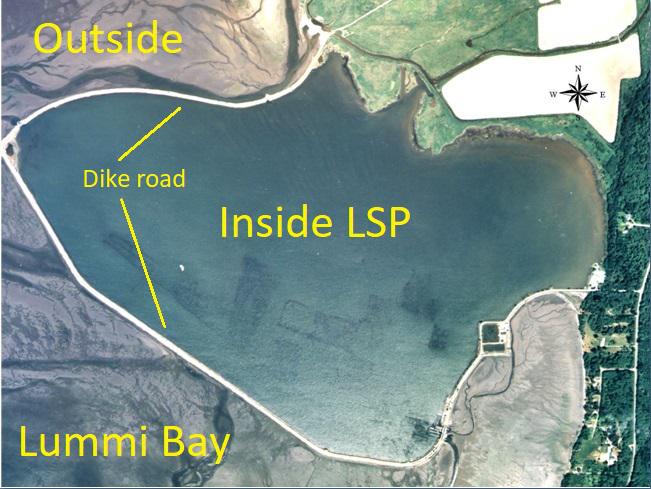 Map of the Lummi Bay Seaponds
Take this free hunter education course!
This free, online alternative to the Washington state course is available to tribal members:
https://nra.yourlearningportal.com/Course/HuntersEdActivityInfoNAPage
Treponeme Associated Hoof Disease (TAHD), also called Hoof Disease or Hoof Rot, is a disease associated with treponeme bacteria that cause abnormal growth and deformities in elk hooves. There are no concerns regarding consumption of otherwise healthy animals with TAHD. If you harvest an elk with abnormal-looking hooves, LNR will take all 4 hooves (or any that look diseased) cut off just above the ankle joint to send in for diagnostic testing. Follow the link below If you would like to learn more about TAHD or to report a limping elk.
https://wdfw.wa.gov/species-habitats/diseases/elk-hoof
Chronic Wasting Disease (CWD)
Chronic Wasting Disease (CWD) is an incurable disease in cervids, such as deer and moose, that affects the brain and nervous system. It is caused by a contagious, misshapen protein called a prion. It spreads from direct contact, body fluids, and antler velvet and can stay in the environment for years. It is unclear if people can contract CWD, but it is recommended not to eat meat from sick or CWD positive deer or elk. This disease has not been found in Western Washington, but it was detected in Spokane in 2024. We are interested in taking lymph node and brain stem samples from any freshly dead deer or elk (within 24 hours) for monitoring purposes. Follow the link below If you would like to learn more about CWD.
https://wdfw.wa.gov/species-habitats/diseases/chronic-wasting
Avian Influenza
Wild water birds are the hosts of avian influenza A viruses. Infected birds and other animals can spread the virus through their mucous, saliva or feces (poop). People rarely get bird flu, but when they do, it's most often through direct unprotected contact (not wearing recommended personal protective equipment, PPE) with infected birds or other infected animals. Avoid touching, handling, or consuming obviously sick birds or birds found dead. Contact us if you have a bird of concern you would like tested. Follow the link below If you would like to learn more about Avian Influenza.
https://doh.wa.gov/you-and-your-family/illness-and-disease-z/bird-flu